
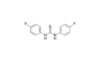
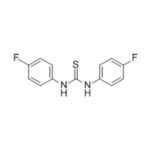
1,3-Bis(4-fluorophenyl)thiourea is a high-purity, symmetric diaryl thiourea compound featuring two para-fluorophenyl groups attached to the thiourea core. The incorporation of fluorine atoms enhances its electronic properties, reactivity, and potential biological interactions, making it a versatile building block in advanced organic synthesis and materials research.
Key Features and Benefits:
- Hydrogen-Bonding Capability: Acts as a bifunctional hydrogen-bond donor, ideal for organocatalysis and anion recognition.
- Catalytic Applications: Serves as an efficient ligand in metal-catalyzed reactions, such as copper(I)-supported catalysis for azide-alkyne cycloaddition (click chemistry) to form 1,2,3-triazoles.
- Reagent in Synthesis: Valuable intermediate for constructing heterocyclic compounds, including pharmaceuticals and agrochemicals.
- Biological Potential: Thiourea derivatives like this exhibit promising antimicrobial, antifungal, anticancer, and enzyme-inhibitory activities due to the thiourea scaffold and fluorine substitution.
- Coordination Chemistry: Forms stable complexes with transition metals, useful in coordination compounds and materials science.
- High Purity and Stability: Supplied in solid form, stable when stored sealed at room temperature.
Applications:
- Organocatalysis and asymmetric synthesis
- Pharmaceutical intermediates (e.g., for anticancer and antimicrobial agents)
- Agrochemical development
- Click chemistry and triazole synthesis
- Ligand in metal complexes for catalysis
- Research in medicinal chemistry and materials science
This fluorinated thiourea derivative is an essential tool for researchers seeking enhanced reactivity and selectivity in synthetic and biological applications.
Reviews
There are no reviews yet.