
Teams & laboratories

One platform for the people who keep laboratories moving.

Give scientists, laboratory managers, EHS teams, and administrators a shared workspace while preserving role-aware access and responsibilities.

A shared operating model

Different responsibilities. Connected records.

Laboratory workSearch, identify, check out, and maintain materials.
Operational oversightReview locations, records, tasks, and follow-up.
Safety documentationOrganize SDS, inspections, training, and waste records.
AdministrationManage roles, laboratories, and structured information.

Role-aware workflows

Support each team with the context they need.

The same platform can present connected inventory and operational records without treating every role as identical.

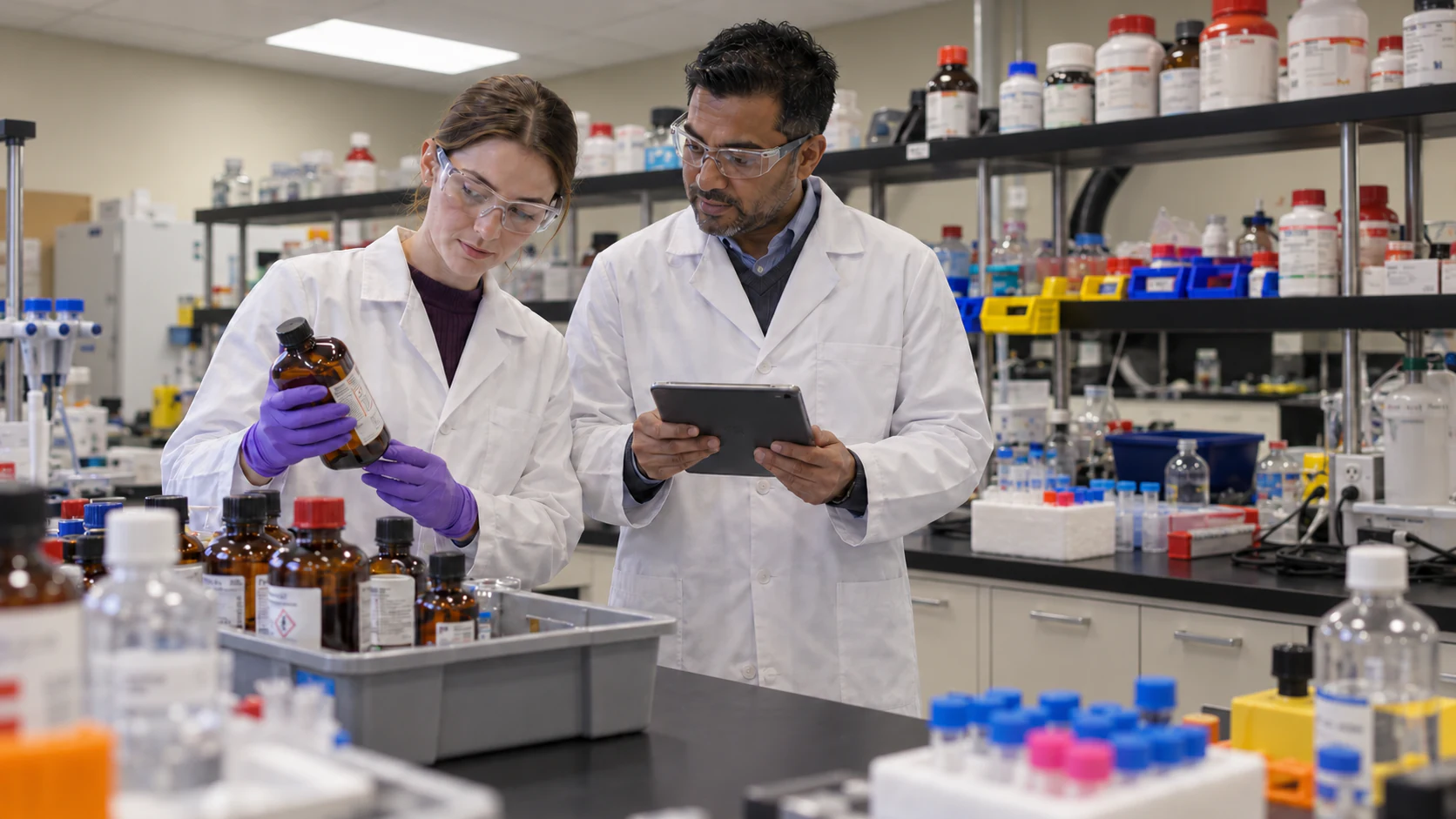
Two scientists reviewing a reagent label and digital inventory records in a laboratory.

Scientists and researchers

Find chemicals, review available documentation, and support routine checkout and return activity while keeping records current.

  • Search inventory and locations
  • Review connected SDS records
  • Check out and return shared materials

Laboratory managers

Coordinate inventory organization, laboratory locations, personnel responsibilities, and recurring operational work.

  • Review inventory status and placement
  • Coordinate inspections and follow-up
  • Organize team and location records

EHS and compliance teams

Manage safety documents, inspections, training, waste information, and operational evidence from a connected workspace.

  • Maintain SDS and document access
  • Track observations and actions
  • Support internal recordkeeping processes

Academic chemistry departments

Organize shared inventory and laboratory records across teaching and research environments with defined roles and locations.

  • Separate laboratories and storage areas
  • Support faculty, staff, and student workflows
  • Maintain structured departmental records

Biotechnology and startup laboratories

Build a practical record foundation that can adapt as teams, spaces, and operational responsibilities evolve.

  • Import existing inventory data
  • Define laboratories and roles
  • Refine workflows as operations change

Organizational administrators

Manage account structure, laboratory separation, role assignments, and supported import or export activities.

  • Configure accounts and laboratories
  • Assign role-based permissions
  • Support structured data movement

How teams work together

Keep daily activity connected to oversight and follow-up.

1

A researcher finds a record

Search by known details and review location and documentation.

2

The material is used

Support checkout, return, and status updates for shared inventory.

3

A manager reviews activity

Use organized records to coordinate locations and responsibilities.

4

EHS maintains context

Connect documents, inspection findings, training, and waste records.

5

Administrators support structure

Manage roles, laboratories, and data movement as needs evolve.

Shared platform, focused views

Connect responsibilities without flattening them.

Role-based permissions can help align access with the records and actions appropriate to each user.

Team Common platform focus Connected context
Scientists and researchers Search, locations, documents, checkout and return Current chemical and container records
Laboratory managers Inventory organization, locations, inspections, personnel Operational status and assigned follow-up
EHS and compliance SDS, inspections, training, waste, compliance documents Evidence and internal recordkeeping workflows
Department administrators Laboratory structure, roles, imports, exports Account-level organization and access

Laboratory environments

Adapt the workspace to how your organization operates.

Use laboratories, locations, and roles to reflect different operating structures without making claims about customer adoption or industry coverage.

Academic chemistry

Shared spaces and varied responsibilities

Support teaching and research laboratories with organized inventory, location, and personnel records.

Biotechnology

Connected operational records

Bring inventory, safety, training, and laboratory documentation into a common workspace.

Growing laboratories

A foundation that can be refined

Begin with existing records and adjust roles, laboratories, and workflows as operations change.

Practical onboarding

Start with clear roles and familiar records.

Prepare inventory data, define laboratory structure, orient teams, and refine responsibilities without committing to an unsupported implementation timeline.

Inventory preparationReview CSV fields and existing record quality.
Role mappingConnect platform permissions to real responsibilities.
Laboratory setupOrganize spaces, storage areas, and teams.
Workflow orientationHelp each role understand its core platform tasks.

A connected laboratory team

See how Synovion Inventory can support your roles and workflows.